
0 Produits - CHF 0.00
  Ajouter au panier

Info Betriebsferien

Liebe Kundinnen und Kunden,

bitte beachten Sie, dass unser Büro über die Osterfeiertage vom 3. bis einschliesslich 6. April 2026 geschlossen ist. In dieser Zeit erfolgt kein Warenversand. Damit Ihre Bestellungen noch rechtzeitig vor den Feiertagen bearbeitet und versendet werden können, bitten wir Sie, Ihre Aufträge bis spätestens Donnerstag, den 2. April 2026, um 12:00 Uhr an uns zu übermitteln. Später eingehende Bestellungen werden ab dem 7. April 2026 wieder bearbeitet. 

Wir danken Ihnen für Ihr Verständnis und wünschen Ihnen schon jetzt frohe und erholsame Osterfeiertage!

Ihr Team AllergyCare AG

************************************************************************************************************************************************************

Chères clientes, chers clients,

Veuillez noter que notre bureau sera fermé pour les fêtes de Pâques du 3 au 6 avril 2026. Pendant cette période, aucune commande ne sera expédiée. Pour que vos commandes soient traitées et expédiées à temps pour les fêtes, merci de les soumettre avant le jeudi 2 avril 2026 à 12h00. Les commandes reçues après cette date seront traitées à partir du 7 avril 2026.

Nous vous remercions de votre compréhension et vous souhaitons de joyeuses et reposantes fêtes de Pâques !

Votre équipe AllergyCare AG

************************************************************************************************************************************************************

Gentili clienti,

Vi informiamo che il nostro ufficio resterà chiuso per le festività pasquali dal 3 al 6 aprile 2026. Durante questo periodo, non verranno effettuate spedizioni. Per garantire che i vostri ordini siano elaborati e spediti in tempo per le festività, vi preghiamo di inviarli entro giovedì 2 aprile 2026 alle ore 12:00. Gli ordini ricevuti dopo questo termine saranno elaborati a partire dal 7 aprile 2026.

Vi ringraziamo per la vostra comprensione e vi auguriamo una Pasqua felice e serena!

Il team di AllergyCare AG

Osteoporosis: The silence disease - Do not wait to act!

Osteoporosis is a disease affecting our bones, which will become fragile with age and risk fracturing easily. This silent disease affects a large part of the population and has serious consequences for health, but there are solutions to prevent it.

What is osteoporosis?

Osteoporosis is a degenerative bone disease that causes bones to become brittle and weak. This condition is due to an imbalance in the bone development process: the production of the cells responsible for degrading the bone increases (osteoclasts), while that of the cells that contribute to bone building decreases (osteoblasts).

Around the age of 30, the bone development process reaches its peak. After that, the bone mass is lost faster than new bone is formed. Postmenopausal women are mostly affected. However, men are also at risk of developing osteoporosis.

Osteoporosis does not show many noticeable symptoms in its early stages, which is why it is often referred to as the "silent disease". However, if left untreated, it can lead to debilitating fractures, loss of mobility, and a decreased quality of life. Therefore, it is essential to be aware of the risk factors and take action to prevent or manage osteoporosis.

Risk factors:

  • Age: The risk of developing osteoporosis increases as the person ages.
  • Sex: The prevalence of fracture risk due to osteoporosis is 51% in women and 24% in men.1
  • Hormone levels: Low levels of estrogen in women and testosterone in men increase the risk of osteoporosis.
  • Diet: Low calcium and vitamin D intake can increase the risk of osteoporosis.
  • Pathologies: Certain drugs (like glucocorticoids) or certain diseases (like diabetes) can also cause osteoporosis.
  • Sedentary lifestyle

What next:

If you are at risk of developing osteoporosis, it is essential to take measures.

The following strategies can help prevent or manage osteoporosis:

  • A healthy diet: A diet rich in calcium and vitamin D and proteins can help to maintain strong and healthy bones.
  • Exercise regularly
  • Quit smoking

What else can we do?7 

In addition to the existing preventive measures cited above, there are several studies showing effects of bacteria on osteoporosis.

Patients with primary osteoporosis have been shown to have dysbiosis compared to healthy individuals. Dysbiosis is a microbial imbalance attributable to the increase or loss of microbial species that damage the epithelial barrier, resulting in colonization by opportunistic pathogens and of the epithelium. Inflammation of the epithelium can lead to local and systemic immune reactions.2

Some strain of L. reuteri including L. reuteri PTA 6475 have shown to repair the epithelial barrier of the intestine and reduce inflammation. They will secrete different elements that enter the bloodstream and are transported to the bone, where they can interact with osteoclasts, osteoblasts and immune cells. L. reuteri 6475, is a bacteria, that prevents increased permeability by stabilizing the tight junctions of intestinal epithelial cells and blocking the inflammatory response.3 It stimulates the regulatory T lymphocytes by the production of anti-inflammatory cytokines, which allows the inhibition of the differentiation of osteoclasts.4

Besides, L. reuteri 6475 synthesizes like butyrate and promotes Treg cells and therefore the differentiation and proliferation of osteoblasts. Short-chain fatty acids (SCFAs) are modulators of immune functions and trigger anti-inflammatory and anti-proliferative activation of intestinal cells.2

Bacterias have also been shown to enhance vitamin D3 absorption by increasing expression of the VDR receptor.5

Furthermore, a recent clinical study showed that daily supplementation of L. reuteri ATCC PTA 6475 for 12 months reduced bone loss by 50% in elderly women with low bone mineral density compared to placebo.6

Conclusion: 

Osteoporosis is a serious and often overlooked condition that can have a significant impact on an individual's quality of life. It is essential to be aware of the risk factors and take preventative measures to reduce the risk of developing osteoporosis and manage the condition if diagnosed.

As previously mentioned, the gut microbiome has been shown to play an important role in bone mass. Therefore, targeting the gut microbiome may be a potential solution to prevent osteopenia or osteoporosis.

By acting now, you can help prevent fractures and maintain strong, healthy bones well into advanced age.

The gut microbiota is not only the biological interface between the immune, metabolic, and endocrine systems but also an important interface between the external environment and bone health. This is supported by a vast number of scientific evidence, and some of them are nicely summarized in the recently published literature review by Tornatore.7

Changes in the composition or function of the usual microbiota can lead to dysbiosis. This microbial imbalance causes damage to the epithelial barrier, our inner skin, resulting in pathogenic colonization and inflammation. This inflammatory response in the gut will send signals to the bone marrow (primary producer of blood cells), which in turn will stimulate osteoclast formation (cells responsible for degrading the bone) and reduce the synthesis of osteoblast (cells responsible for building the bone), thereby affecting bone health.

Several studies have shown that beneficial bacteria in the gut produce factors that modulate the immune response, help maintain gut barrier integrity, and help defend against pathogenic microorganisms. L. reuteri ATCC PTA 6475 is a beneficial bacteria that has a potential anti-inflammatory effect and helps to prevent damage to the epithelial barrier. Several studies carried on in the laboratory showed that L. reuteri ATCC PTA 6475 improves bone density in mice,9 prevents bone loss in a postmenopausal ovariectomized mouse model8 and prevents bone loss in mice with type 1 diabetes.10

Furthermore, a recent clinical study showed that daily supplementation of L. reuteri ATCC PTA 6475 for 12 months reduced bone loss by 50% in elderly women with low bone mineral density compared to placebo.6

All these studies suggest that L. reuteri ATCC PTA 6475 may have a preventive effect on bone health and pave the way for further research in this area.
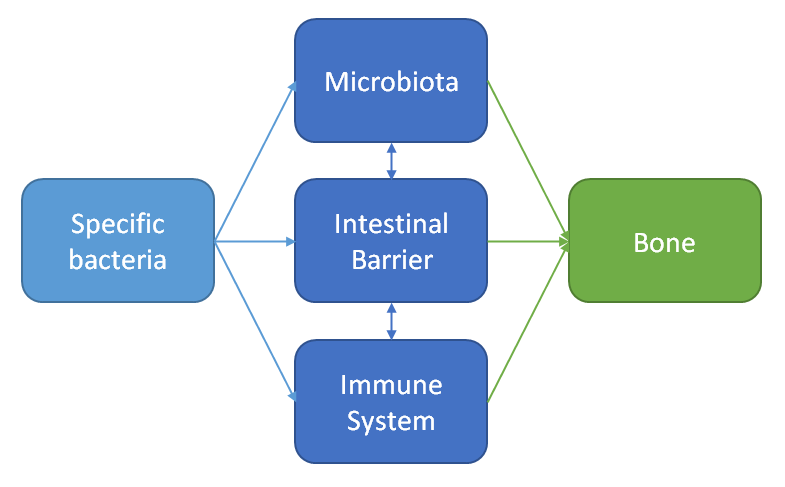
Osteomicrobiology – Current literature review

Osteomicrobiology – Current literature review

1) Lippuner K. et al., (2005). 2) Li et al., (2022). 3) Karimi et al., (2018). 4) Lu et al., (2021). 5) Mamenko and Romanko, (2020). 6) Nilsson, (2018). 7) Tornatore, Praxis (2023). 8) McCabe, (2013). 9) Britton, (2014). 10) Zhang, (2015).

M. D'Agostino & C. Dominguez, 27.09.2023

Adresse

AllergyCare AG
Vordergasse 43
CH-8200 Schaffhausen

  • Cette adresse e-mail est protégée contre les robots spammeurs. Vous devez activer le JavaScript pour la visualiser.